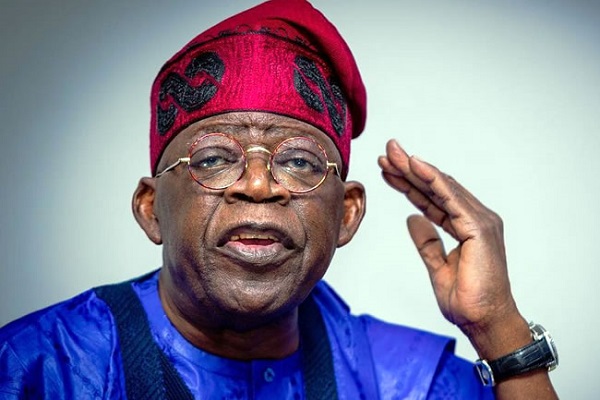
The Presidency has dismissed claims that Nigeria is on the verge of collapse, describing them as exaggerated and disconnected from reality.
In a statement on Friday morning, August 8, Sunday Dare, Special Adviser to President Bola Tinubu on Media and Public Communications, criticised a recent editorial titled “Nigeria is Collapsing under Tinubu’s Watch” for misrepresenting the country’s economic situation and fuelling public anxiety.
While acknowledging ongoing economic difficulties, Dare insisted the challenges are not as dire as portrayed. He said the widely reported figure that 33 million Nigerians are at risk of hunger is a projection from the Cadre Harmonisé food security analysis — not a confirmed outcome.
“Criticism is welcome, but it must be rooted in truth, not fear-mongering,” Dare said.
He accused the editorial of overlooking government initiatives aimed at reducing hardship, citing measures such as the release of grain from national reserves, agricultural support programmes, and targeted cash transfers.
Dare also highlighted what he described as positive signs from ongoing reforms, including a more stable naira-dollar exchange rate and planned tax and social policy adjustments expected to yield stronger results by 2026.
Read the full State below.
STATEHOUSE PRESS STATEMENT
RESPONSIBLE CRITIQUE REQUIRES FACT-DRIVEN NARRATIVES
A recent editorial by Daily Trust paints an exaggerated and unbalanced portrait of Nigeria as a nation overwhelmed by hunger, hardship, and helplessness. We were not surprised by the newspaper’s opinion, as the paper has consistently and deliberately misinformed its readers about the government’s policy. The Tinubu administration believes in the right of the media to offer constructive criticism, but it must be anchored on facts, not distortion or selective pessimism. The Daily Trust has on several occasions breached this rule by misrepresenting government policies and actions—a trend for which the newspaper has publicly apologised at least twice.
While no one in the Tinubu administration denies that some of our citizens face economic challenges, it is essential to separate honest concern from exaggerated pessimism and generalisation.
The Tinubu administration is not indifferent to the genuine concerns of the people. The irony is that what is often criticised today are, in fact, the policies that will ensure that Nigerians have a more secure, stable, and prosperous future.
Misrepresentations, selective use of projections, and alarmist narratives do not serve the public good; they distract from the genuine progress underway nationwide.
To suggest, as Daily Trust did in its biased editorial, that “Nigerians are hungry” without recognising the government’s ongoing interventions perpetuates despair instead of empowering citizens with the truth.
President Bola Ahmed Tinubu is not indifferent to Nigerians’ difficulties. On the contrary, he is taking deliberate, targeted steps—many already yielding results—to reset our economy from a legacy of consumption without productivity, opacity without accountability, and policy that served the powerful, not the people.
This is the context that Daily Trust omitted in its jaundiced editorial.
1. UNICEF Projection vs. Cadre Harmonisé Analysis. The editorial referenced a UNICEF “prediction” from April 2025 stating that 33 million Nigerians, including 16 million children, would face hunger in 2025. This figure has been widely cited but wrongly interpreted.
What was presented was not a UNICEF-specific report but the Cadre Harmonisé Food and Nutrition Insecurity Analysis, jointly prepared by the Federal Government of Nigeria, FAO, WFP, and UNICEF. It is not a current count, but a worst-case projection for the June–August 2025 lean season, assuming no mitigation actions by government or partners.
Here are some of the measures taken by the government to ensure we never get there: Over 42,000 metric tons of grains were released from federal strategic reserves; 117,000 metric tons were under additional procurement; the President activated the Food Security Council; emergency nutrition support was scaled up in Borno, Yobe, Adamawa, Katsina, Sokoto, and Bauchi States.
Malnutrition is a serious national concern, but let’s not localise it as a “Northern Nigeria” crisis. Since 2020, COVID has disrupted the global food system, worsened the Russia-Ukraine war, and is now aggravated by conflict in the Middle East.
According to the World Bank’s April 2025 Food Security Update, over 1.4 billion people worldwide are under food stress, a problem that is not unique to Nigeria.
2. The Naira is Not Worthless — It Has Found Its Level and Is Strengthening
The editorial’s use of the term “worthless naira” is false and misleading.
Since hitting a low of ₦1,800/$1 in March 2024, the naira has rebounded strongly due to: Increased oil receipts and remittances, Restoration of investor confidence, Unification of the FX window, Reduction of FX backlog by over $4 billion (CBN data, May 2025)