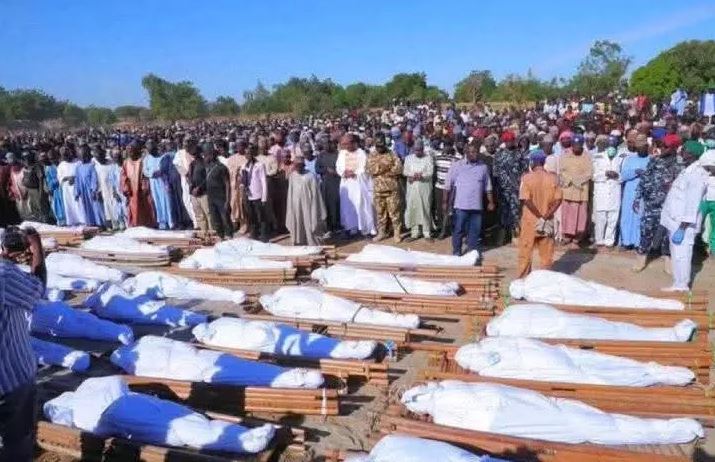
On Tuesday, the usually staid proceedings of the Katsina State House of Assembly were pierced by raw emotion as the Chief Whip, Ibrahim Dikko, fought back tears while describing killings by bandits in his constituency, which covers the Matazu Local Government Area.
“Out of the 10 wards, eight are under siege,” he told his colleague lawmakers. “Farmers cannot go to farms. Just yesterday, near the secondary school, they killed a young man and rustled four oxen used for ploughing.”
His voice broke as he added, “Yesterday, they killed five farmers. The day before, they killed seven. Wallahi, the farms are inaccessible anymore. Mr Speaker, we are in dire need of help.”
For a moment, the chamber fell silent. Lawmakers, many of them from communities equally scarred by attacks, knew too well that Mr Dikko’s tears reflected the daily fears of thousands across rural Katsina.
The Assembly swiftly passed motions urging urgent deployment of more security forces to Matazu and neighbouring Sabuwa, and called for an investigation into why security personnel had been withdrawn from several villages.
Speaker Nasir Daura pressed for stronger collaboration between police and military units, insisting that peace be restored.
During the plenary session, the lawmakers also called for the deployment of more security personnel in Sabuwa Local Government Area, particularly in Tashar Bawa and other communities experiencing frequent bandit attacks across the state.
The resolutions followed motions sponsored by Mr Dikko and Ibrahim Machika, representing Sabuwa LGA.
But outside the ornate walls of parliament, the violence continued.
In Rinjin Idi, Sayaya and Karaduwa villages, locals speak of farming fields turned into death traps.
In recent weeks, at least a dozen farmers have been killed on their farms, they said.
“I lost two brothers on their farms last week. Nobody goes to the fields anymore. Hunger is coming,” said Ibrahim Sani, a farmer from Rinjin Idi.
For women like Hauwa’u Matazu in Sayaya, the nights are long. “We cannot sleep at night. We hear gunshots almost daily and our children wake up crying. We feel abandoned,” she said.
In Karaduwa, residents recalled the abduction of their village head, Abdullahi Bello, in July. “If they can take him, who will protect the rest of us?” asked Aminu Murtala, a resident.
The kidnappings and killings have emptied homes and driven families into neighbouring towns.
Farming, the backbone of life in Matazu, has largely ground to a halt. Cattle rustling has stripped households of their most valuable assets.
Earlier this month, residents of six Matazu communities wrote a joint petition to Governor Dikko Radda and senior security chiefs, detailing their plight.
The letter, shared on social media, listed frequent kidnappings, lack of security presence, and the collapse of farming and trade. They demanded the deployment of soldiers and police, support for vigilante groups, and economic relief to ease their hardship.
Matazu council chairman, Shamsuddeen Sayaya, has since appealed for calm. In a message to residents, he urged vigilance while assuring them that “authorities are working tirelessly with security agencies” to protect lives and restore peace.
But many locals remain sceptical. “We have heard promises before. What we need is action, not words,” said a farmer in Mazoji, who asked not to be named for fear of reprisals.